Category: Party

Party board games live or die by one thing: the room. A game that works brilliantly with six close friends who like to argue will fall completely flat with ten coworkers who just met at a company retreat. That’s not a flaw in the game; it’s the nature of the format. More than any other category, party games are social tools first and games second, and the best ones are designed with that priority clearly in mind.

What that means in practice is that the rules have to disappear. Nobody at a party wants to spend twenty minutes learning how to play something. The best party board games get everyone moving within five minutes, and the game itself fades into the background while the people at the table become the entertainment.

That’s a harder design target than it looks. A game with too many rules kills the momentum before it starts. A game with too few gives people nothing to push against. The sweet spot is a tight, simple structure that creates just enough constraint to generate interesting decisions, then gets out of the way.

The large group problem

Most board games stop scaling well above five or six players. Party games for large groups have a different design challenge entirely: keep everyone engaged even when it isn’t their turn, prevent any single player from dominating the experience, and make sure the chaos of ten people in a room is an asset rather than a liability.

The games that solve this tend to use simultaneous play, team structures, or audience-participation mechanics that keep the people not actively taking a turn invested in what’s happening. Exploding Kittens handles it through sheer speed and table talk: turns are short, the threat of elimination is always present, and watching someone else panic their way through a bad draw is genuinely entertaining even when you’re not the one playing it. It’s one of the more reliable fun party games precisely because the spectator experience is almost as good as the playing experience.

That’s not easy to engineer. Most games that try to solve the large group problem end up creating dead time for half the table instead.

Party games for adults vs. everything else

There’s a real difference between party games for adults and games that just happen to be played at parties. Adult party games tend to lean on social dynamics, hidden information, or humor that requires a shared frame of reference. They work because the players bring the content; the game just provides the structure.

The best party card games operate this way. The deck is almost irrelevant compared to the people holding the cards. Exploding Kittens works as well as it does partly because the negotiation, bluffing, and betrayal that happen around the mechanics are entirely player-driven. The game creates the conditions; the adults at the table create the actual experience. Strip out the social layer and there isn’t much left, which is exactly the point. The game is a catalyst, not the thing itself.

That’s also why these games tend to scale with the group rather than against it. A louder, more opinionated table doesn’t break a well-designed adult party game. It improves it. The worst thing that can happen to a party game is a quiet, polite group that plays it exactly as written.

When the game needs to work for everyone

Not every party is adults only. Best party board games for mixed groups need a different kind of design: accessible enough that a twelve-year-old isn’t lost, but not so simplified that the adults are bored by round two. That’s a narrower target than it sounds, and most games miss it in one direction or the other. If the group skews younger, the kids games category is the more honest starting point.

The ones that land tend to use physical or visual mechanics rather than wordplay or cultural references, which age poorly and exclude younger players. Speed-based games, pattern recognition, and anything with a tactile element tend to cross the age gap better than trivia or bluffing games that rely on shared context.

What separates good party games from forgettable ones

The real test isn’t whether people enjoy the game the first time. Almost any party game gets a decent first session on novelty alone. The test is whether someone suggests it again three months later, or whether it gets requested at the next gathering. Fun party games that pass that test tend to have one thing in common: the stories they generate. A game session that produces a moment people reference later has done its job. A game that ends and is immediately forgotten hasn’t, regardless of how smoothly it played.

For evenings that call for something more focused and head-to-head, the two-player games category is worth a look.

What to look for in a party board game:

  • Teaches in under five minutes with no prior experience
  • Scales to at least six players without dead time
  • Produces moments people talk about after the game ends
  • Works across a range of energy levels and group dynamics
  • Short enough to play twice in one sitting if the group wants to
  • 5 Horror Board Games Worth Playing This Halloween

    5 Horror Board Games Worth Playing This Halloween

    Every October the same six party games get a pumpkin sticker slapped on the box and get passed off as a horror list. None of that here.

    These five earned their spot because something about how they play changes once everyone at the table stops trusting each other: hidden identities, real-time panic, or the plain discomfort of being handed a villain’s win condition and realizing you kind of want it. Some of these you can walk into cold. One of them will make you check your friend’s mouth for dental work.

    GamePlayersPlaytimeBest For
    Villainous2-650-60 minCompetitive tables who want separate plots, not a shared board
    Horrified: Universal Monsters1-5~60 minCo-op groups who like triage under a shrinking clock
    The Thing – The Boardgame1-860-120 minHidden-role nights built on real paranoia
    Scream: The Game3-820 minFull six-plus tables who want fast, app-driven panic
    Campy Creatures2-520-30 minA quick, mean bluffing round between bigger games

    Villainous Makes You Root for the Wrong Side

    Villainous doesn’t work like most competitive board games, and that’s the entire point. Every player picks a different Disney villain with a private board, a private deck, and a win condition that has nothing to do with anyone else’s. Ursula needs to collect a set of ingredients and cast one specific spell. Jafar needs to control certain locations while holding the lamp. You’re not racing for shared resources so much as running separate plots that crash into each other when a Hero shows up uninvited.

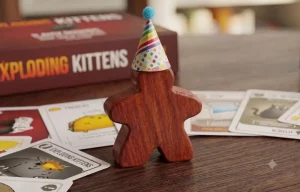
    This game has the coolest meeples, by far.

    Villainous earns its spot here over a generic villain-themed game because it commits to each character’s own story logic instead of reskinning the same mechanics five times.

    Playing Maleficent doesn’t feel like playing Hades wearing a different coat of paint. The first game will be messy while everyone learns their own deck in isolation. The second game is where it clicks, when players stop just playing their own hand and start plotting against the table.

    Six Universal Monsters, One Clock, No Room for Error

    Horrified: Universal Monsters throws Dracula, the Invisible Man, the Mummy, the Bride of Frankenstein, the Wolf Man, and Frankenstein’s Monster onto one board and hands you a shrinking amount of time to deal with all of them before the Terror Track runs out. That shrinking clock, not the theme, is where the dread comes from.

    Every monster has its own defeat condition and its own way of making your life worse, so the group has to triage in real time: chase the Invisible Man’s item combo, or drop everything because Dracula just flipped his coffin and started closing in on a villager.

    The cooperative pressure works because the game refuses to let you solve one monster at a time in a vacuum.
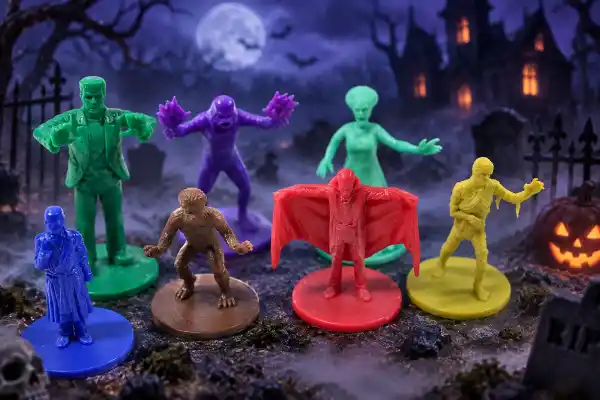
    Classical villains that have to be in your Halloween party

    Horrified: Universal Monsters forces the whole table into constant renegotiation about what gets sacrificed to save something else, and that argument, not the fog-and-pumpkin aesthetic, is what makes it feel like the back half of a real monster movie, not a board game about one. It scales from one player to five without falling apart, which is rare for anything this chaotic.

    The Thing Doesn’t Care If You Trust Your Friends

    The Thing – The Boardgame is built entirely around not knowing who’s still human, and the newer Thule Station expansion adds a genuinely uncomfortable new way to almost find out. Instead of the old wire-and-flamethrower blood test, Thule Station gives you flashlights and dental fillings: the Thing can copy a person down to their voice and memories, but it can’t fake metal in someone’s teeth.

    So you can check a person’s mouth and confirm they’re human. You can never confirm they’re not, which is exactly the kind of asymmetry that keeps a hidden-role game honest instead of solvable.

    Thule Station also leans into the fact that it’s set at the Norwegian station where the story starts, before Outpost 31 ever gets involved, and it lets a game end with the sled dog escaping into the snow, which then infects your next base-game session with a dog that behaves like it’s already been changed.

    There’s a new endgame location too, a UFO that gives a cornered Thing one last shot at getting off the ice, plus rules letting a paranoid human sabotage the team’s escape and try to survive alone. It’s meaner than the base game, and it knows it.

    Your Phone Is the Real Villain in Scream

    Scream: The Game hands the killer’s job to an app, and that’s what makes it worth the table time. You and everyone else work through a deck of Scene cards, drawing, trading, or completing objectives with the Scream cards in your hand, while Ghostface calls in through the app on his own schedule to mess with you.

    He can force everyone to check their hand for his cards and dump it if you’re holding three, threaten a location and demand a specific item, or single someone out with a direct stalk that ends the game if they can’t produce what he’s asking for.

    The part that works is how it turns hand management into a countdown. You can only draw on your turn, you can only trade one card at a time, and the app never stops the clock to let you catch up, so a six-player game means passing the knife around a full loop before you’ve built up anything useful.

    Catan’s robber applies that same kind of pressure; here it’s aimed at you personally, and it’s running on a clock. It plays cleanest with a full table. At three or four players it loses a lot of its bite.

    Nobody’s Bluffing in Campy Creatures. That’s the Problem.

    Campy Creatures starts everyone with the exact same hand of creatures, which sounds like it should kill any deduction game dead before it begins. It does the opposite. You’re a mad scientist trying to capture the most valuable mortals over three rounds, and since every player holds an identical set of monsters, there’s no card advantage to chase and no rare combo to draw into.
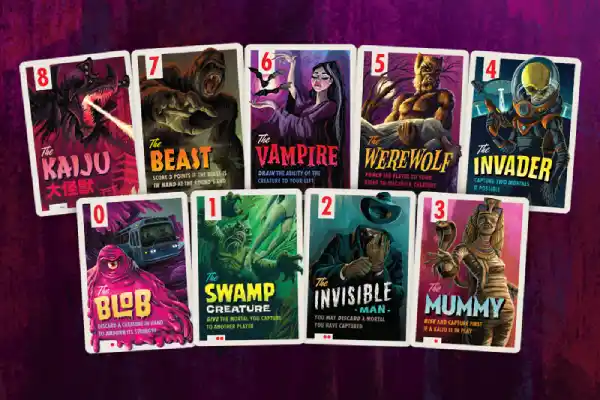
    The art of Campy Creatures is top quality

    The entire game is reading what your opponents are about to do with the same options you have, and picking the creature that beats their guess instead of yours.

    Most bluffing games run on the fun of not knowing what’s in someone’s hand. Campy Creatures runs on the opposite: you know exactly what everyone could play, which turns every round into a small, mean psychology experiment instead of a card gamble. It’s the lightest weight on this list and plays fast, but the mind games get sharper the more people you seat at the table.

    The Difference Between Horror Board Games and Halloween Decorations

    None of the five games above are tense because of black card stock or a pumpkin on the box. The dread, or the outright discomfort, comes from something about the system itself working against you: an app that won’t wait for you, a monster’s ability nobody warned you about, a friend across the table who’s supposed to be human and might not be.

    That’s the test worth applying to any list of horror board games instead of a list of games you happen to play near Halloween decorations.

    If you’re building a table for the holiday and only have room for one pick, go cooperative with Horrified if your group likes working together under pressure, or go for The Thing if you want people quietly side-eyeing each other for the rest of the night.

    Scream earns its spot with a full table of six, not a cozy foursome. Villainous and Campy Creatures both work year-round, which says something about how little they lean on the season to be worth playing.

    Halloween board games get treated like a genre of decoration. The good ones are just good games that happen to land at the right time of year.
  • What Is Spiel des Jahres? Germany’s Board Game Award, Explained

    What Is Spiel des Jahres? Germany’s Board Game Award, Explained

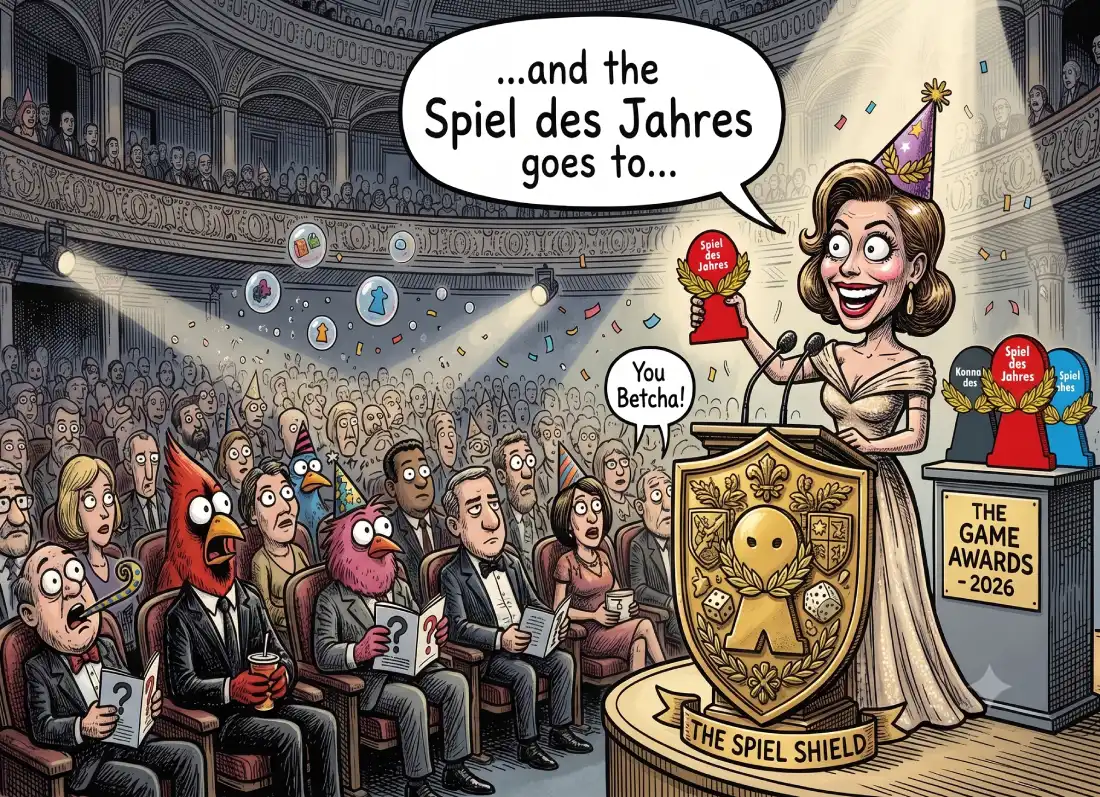
    Every July, a handful of German board game critics get together and announce a winner. And somewhere, a small publisher’s print run quietly triples overnight. That’s Spiel des Jahres in one sentence.

    But the actual mechanics behind it are stranger, and honestly more interesting, than “board game Oscar,” which is the lazy comparison most outlets reach for when they don’t want to explain it properly.

    The Short Answer

    Spiel des Jahres is German for “game of the year.” It’s an annual award, founded back in 1978 by a small panel of board game critics and journalists in Germany. Here’s what it isn’t, though: it’s not a sales award, it’s not a public vote, and no publisher is buying their way onto that stage. A jury plays through hundreds of new releases every single year and picks one winner they think best represents what a great board game should be. No entry fee. No submission process a publisher can grease. Games get sent in, the jury plays them, and most of them just… lose.

    Why It Isn’t a Popularity Contest

    The jury’s stated criteria sound almost boring on paper: rules you can teach in a few minutes, a box that doesn’t lie about what’s inside, components that hold up to actual use, and a game that stays fun on repeat plays with people who aren’t hobbyists. That last part is the whole ballgame, honestly. Think about it this way: Spiel des Jahres has never been chasing the game with the deepest strategy or the most ambitious rulebook. It’s chasing the game a family can crack open on a Tuesday night without anyone needing to read sixteen pages first.

    That’s earned the award a reputation among hardcore hobbyists as a bit soft, rewarding “gateway” games over anything with real teeth. And look, that reputation is mostly deserved. But it’s also kind of the entire point. The jury isn’t trying to crown the best game in the hobby. It’s trying to crown the best game to hand a total stranger.

    Three Awards, Not One

    Most people who’ve only half followed this know the big one. But there are actually three separate prizes handed out the same night, each judging a different weight class.

    AwardStartedWhat It Rewards
    Spiel des Jahres1978Family-weight games, easy to teach, broad appeal
    Kennerspiel des Jahres2011Heavier “connoisseur” games with more strategic depth
    Kinderspiel des Jahres2001Games built specifically for children

    Kennerspiel got added because the jury kept running into excellent games that were just too complex to hand a non-gamer, and they wanted a way to recognize those without watering down what the main award stands for. Kinderspiel exists for the same reason at the other end. Games built around a six-year-old’s attention span, not an adult’s.

    What Wins, and What Doesn’t

    Look at the winners list across five decades and a pattern falls out fast. The award loves games that make an unlikely group of people feel briefly like they’re good at something together. Here’s what I mean: Catan, which took the prize in 1995 back when it was still called Die Siedler von Catan, is maybe the clearest example of what a win can do to a game’s trajectory. It went from a clever German trading game to a fixture in living rooms that had never bought a board game before. Dixit won in 2010 on the strength of being playable by people who’d swear up and down they’re bad at “creative” games. And Sky Team, the two-player cooperative flight-deck game I’ve reviewed and rated a 4.8 out of 5, took the win in 2024. Part of a run of cooperative titles the jury favored three years running, before this year’s ceremony finally broke the streak with a party game instead.

    None of these are the most mechanically interesting games on a shelf full of hobbyist darlings. That’s not a knock, to be clear. It’s just a different job than the one a Kickstarter darling with forty custom miniatures is trying to do.

    Why Winning Actually Matters

    This is where the award stops being trivia and starts being commercially real. A Spiel des Jahres win can multiply a game’s sales tenfold or more in the months after the ceremony, largely because German retail treats the winner as the default gift recommendation heading into Christmas… which is the biggest sales window in the entire hobby. Toy stores that never stock hobbyist board games will carry the winner. That’s a kind of mainstream retail placement most publishers simply can’t buy, and it’s a big reason why every publisher in Germany is quietly hoping their game gets noticed by five people most of the public has never heard of.

    I’m not going to pretend the award doesn’t have blind spots, either, because it does, and they’re worth naming instead of politely skipping over. It’s historically rewarded a fairly narrow, Eurocentric idea of what a “family game” looks like.

    And the pool of designers it draws from has been overwhelmingly male for as long as anyone’s been tracking it. Neither fact makes the award meaningless. It just means it’s judging a specific, narrower question than “what’s the best game,” and that’s worth knowing before you treat the winner’s sticker on a box as gospel.

  • Three Indie Board Games That Struck Gold on Kickstarter

    Three Indie Board Games That Struck Gold on Kickstarter

    There was a time when the tabletop gaming industry was tightly controlled by an elite group of traditional publishers. If a designer had a brilliant, quirky, or avant-garde game concept, they had to pitch it to executives, navigate corporate gatekeeping, and hope a company was willing to risk millions of dollars on printing and distribution.

    Then came Kickstarter.

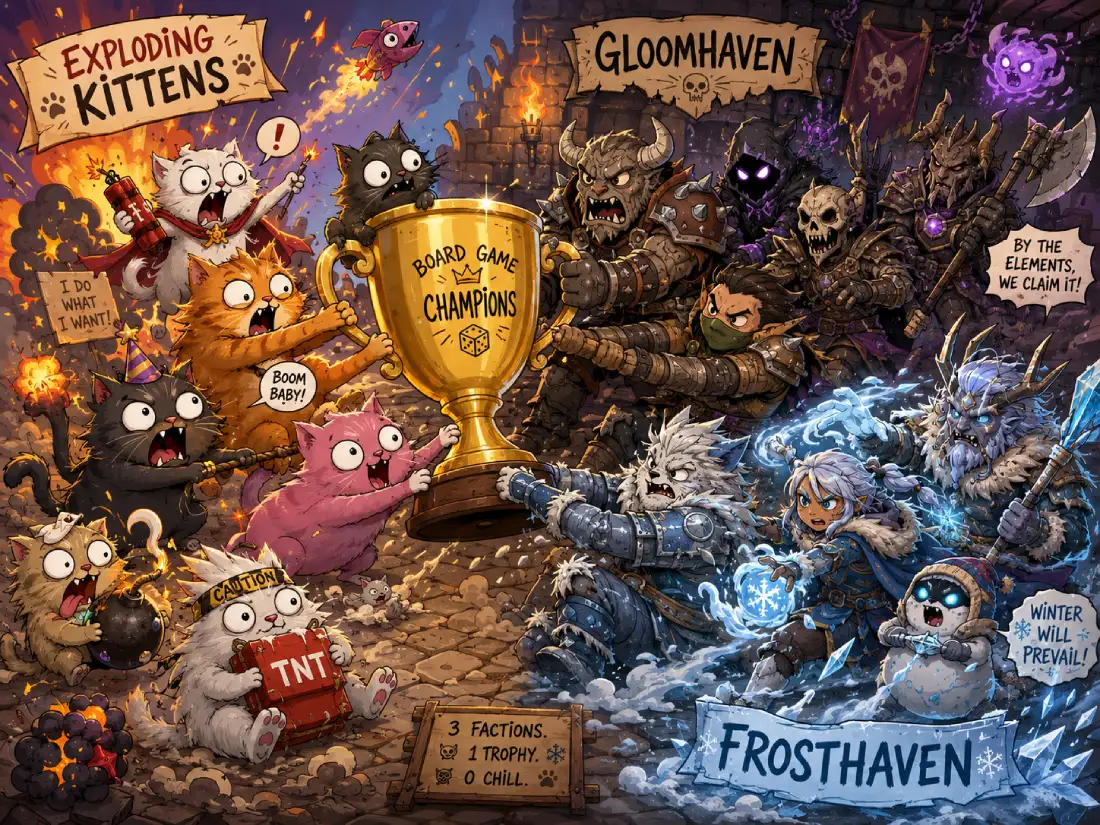
    The crowdfunding revolution completely decentralized the industry, turning everyday gamers into venture capitalists. It allowed weird, niche, and highly ambitious designs to bypass the traditional pipeline and go straight to the people who would actually play them. While thousands of projects have launched on the platform, a select few didn’t just meet their funding goals—they exploded into massive international phenomena, forever changing the landscape of modern board gaming.

    Here is a deep-dive look at three legendary Kickstarter campaigns that turned indie dreams into global tabletop empires.

    1. Exploding Kittens: The Viral Masterclass in Strategic Simplicity

    In 2015, a project hit Kickstarter with a deceptively simple premise: it was essentially Russian Roulette, but with weaponized, hyperactive felines. Created by Elan Lee, Shane Small, and Matthew Inman (the creative mind behind the wildly popular webcomic The Oatmeal), Exploding Kittens became an instant masterclass in how to leverage internet culture and viral marketing into crowdfunding gold.

    Campaign Metric Exploding Kittens Statistics
    Initial Funding Goal $10,000
    Total Amount Raised $8,782,571
    Total Backers 219,382 backers

    The Secret to Its Massive Success

    The campaign reached its modest $10,000 goal in just eight minutes. By the time the campaign closed, it had shattered records to become the most-backed Kickstarter project in history at the time.

    The secret was accessibility wrapped in relatable, internet-friendly humor. While hardcore gamers were busy backing complex miniatures games, Exploding Kittens targeted the casual market. It was a fast-paced party game that anyone could learn in two minutes, but it possessed just enough take-that strategy—using Defuse cards, See the Future cards, and forced phase skips—to keep people coming back.

    Today, Exploding Kittens is a household name, lining the shelves of major retail giants globally, and has spun off into an entire ecosystem of expansions, mobile apps, and merchandise.

    The video that changed it all

    2. Gloomhaven: Dismantling the Traditional Retail Paradigm

    If Exploding Kittens captured the casual party crowd, Isaac Childres’ Gloomhaven did the exact opposite: it took the hardcore, dedicated euro-gaming community by absolute storm. Launched in 2015 with a modest initial print run, this massive, twenty-pound box of dark fantasy dungeon-crawling redefined what players expected from a campaign-driven legacy game.

    Campaign Metric Gloomhaven (First & Second Print)
    Initial Funding Goal $70,000
    Total Combined Raised Over $4.3 Million (Across Print Runs)
    BoardGameGeek Rank #1 Rated Game (2017–2022)

    The Secret to Its Massive Success

    Traditional publishers would have looked at Gloomhaven and scoffed at the production costs. The game featured nearly 100 scenarios, dozens of unlockable character classes hidden inside sealed tuckboxes, and a deeply tactical, card-driven combat system that completely eliminated the randomness of dice rolling. It was an enormous financial risk.

    But Childres utilized Kickstarter to prove the market existed. The first print run earned a passionate cult following. Word-of-mouth spread across the internet like wildfire, praising the game’s staggering depth and mechanical brilliance. When the second printing hit Kickstarter in 2017, it raised a staggering $3.9 million from over 40,000 backers who were desperate to get their hands on the elusive behemoth.

    Gloomhaven went on to spend years unseated as the number-one ranked board game on BoardGameGeek, spawning the accessible prequel Jaws of the Lion, a critically acclaimed digital adaptation, and the massive sequel Frosthaven.

    3. Frosthaven: The Pinnacle of Crowdfunding Excess

    You cannot talk about Kickstarter success stories without looking at the spiritual successor to the previous entry. In 2020, Isaac Childres returned to the crowdfunding well with Frosthaven, a standalone campaign set in the same universe but featuring an entirely new narrative, refined mechanics, and an intricate town-building system.

    The resulting campaign didn’t just succeed; it completely re-wrote the record books for what a tabletop project could achieve.

    Campaign Metric Frosthaven Campaign Statistics
    Initial Funding Goal $500,000
    Total Amount Raised $12,969,608
    Total Backers 83,739 backers

    The Secret to Its Massive Success

    Frosthaven benefited from a perfect storm of community goodwill, premium brand authority, and a captive global audience looking for immersive, long-form entertainment at home. The campaign generated millions of dollars within its first few hours, ultimately cementing itself as the highest-funded tabletop game in Kickstarter history.

    By treating backers as part of the developmental journey—providing detailed production updates, revealing stretch goals that directly enhanced the component quality, and offering exclusive modular add-ons—Cephalofair Games demonstrated the absolute peak of community-driven design. It proved definitively that dedicated hobbyists are more than willing to pay premium prices upfront for a guaranteed piece of cultural tabletop history.

    The Ultimate Crowdfunding Legacy

    The jaw-dropping success of projects like Exploding Kittens, Gloomhaven, and Frosthaven completely changed the power dynamics of the board game industry. They proved that with the right hook, an authentic relationship with the community, and airtight mechanical design, indie creators can build global franchises right from their living rooms.

    The next time you open a massive, component-heavy box or slide a quirky party game across the table on game night, take a close look at the box lid. There’s a very high chance you are looking at a game that wouldn’t even exist without the collective backing of thousands of passionate strangers on the internet.