Category: Cooperative

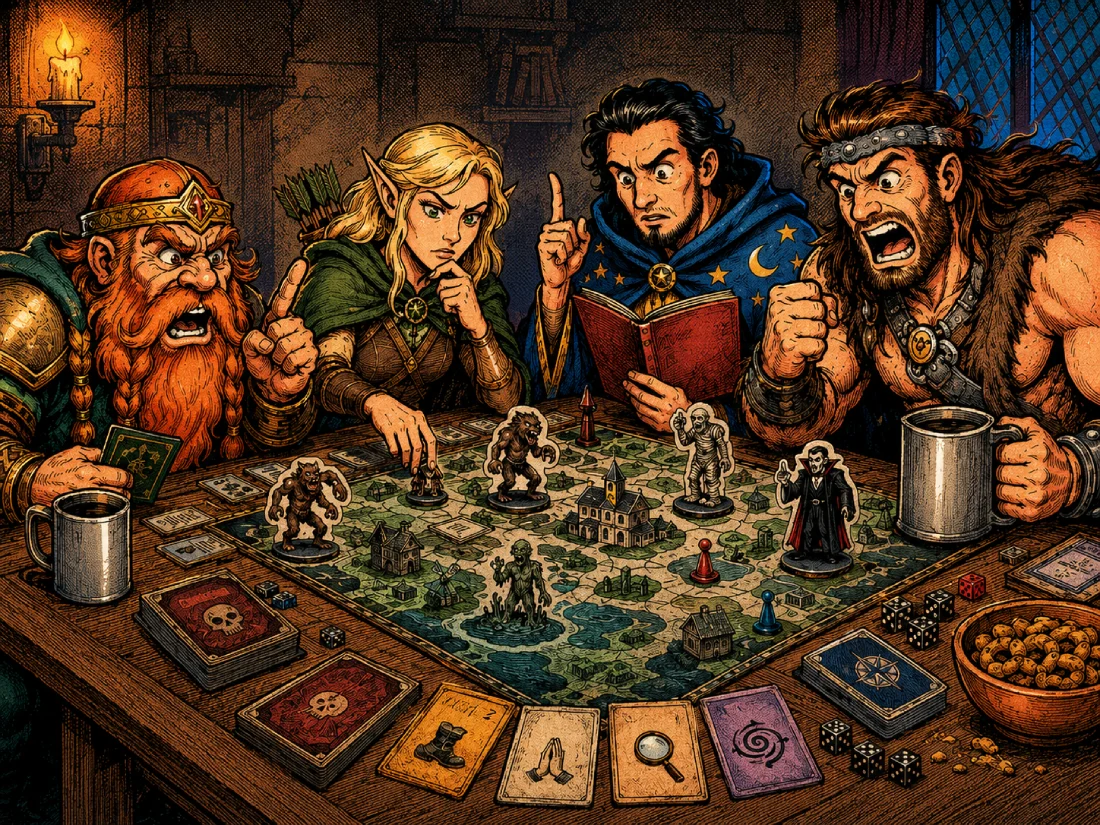
Most board games put you against the people sitting next to you. Cooperative board games flip that entirely. Everyone wins together or everyone loses together, and the game itself is the opponent. That sounds like a small change in structure, but it produces a completely different dynamic at the table: arguments about strategy become collaboration, the quiet player who never pushes back suddenly has to, and the person who always dominates has to learn to share the decision-making or drag everyone down with them.

That last part is either the format’s greatest strength or its most notorious problem, depending on your group.

The alpha player problem and why it matters

Anyone who’s played enough co-op board games has met the alpha player: the person who figures out the optimal move for every player on every turn and just announces it. If everyone follows along, you’re not really playing a cooperative game anymore. You’re watching one person solve a puzzle while the others nod. The best cooperative games are designed to make that impossible, or at least expensive.

Bomb Busters handles it through information asymmetry. Each player holds cards only they can see, which means nobody has the full picture and nobody can make decisions for anyone else without losing something in the translation. The person who wants to run the table has to trust other players to interpret their own information correctly, which is its own kind of uncomfortable. It’s a tighter, more anxious design than most co-op games, and it works precisely because it removes the safety net of one person knowing everything.

When the game hits back

The other thing that separates good cooperative board games from forgettable ones is how the game itself pushes back. A co-op game with a passive threat isn’t really a game; it’s a group puzzle with a timer. The best ones make you feel like the game is actively trying to beat you.

Horrified does this by running multiple monsters simultaneously, each with their own movement logic and their own win condition for the players to resolve. You might be two turns from defeating the Wolfman when Dracula starts closing in from the other side of the board, and the Creature from the Black Lagoon is doing something you haven’t had time to deal with yet. The game doesn’t wait. The pressure compounds in a way that forces real-time negotiation about priorities, and getting it wrong feels earned rather than arbitrary.

That’s what the best co-op board games for adults tend to get right: the loss has to feel like your fault, not the game’s.

Cooperative games that actually teach teamwork

There’s a version of cooperative gaming that’s less about pressure and more about process. The Loop is built around a time travel mechanic where the players are trying to stop a rogue AI from completing iterations of a loop, and the way the game escalates means every round gets measurably harder than the last. The catch is that the actions players take to fight back also feed the loop, so every decision has a cost you have to account for collectively.

What makes it interesting as a team board game is that it requires genuine division of labor. Different players will specialize in different responses, and coordinating those responses across a tightening timeline is the actual game. It’s one of the few designs where talking through your turn out loud before you take it is not only allowed but necessary. If that kind of systems-heavy thinking appeals to you outside the co-op format, the strategy games category is worth a look.

What cooperative board games for families get right

The format also travels well to mixed-age tables, and better than competitive games in some ways. When everyone is working toward the same goal, the experience gap between a ten-year-old and an adult matters less. The kid who spots something the adults missed becomes an asset rather than a liability, and losing together tends to sting less than losing to someone sitting across from you.

Horrified in particular lands well with families: the Universal Monsters theme is recognizable without being frightening, the difficulty scales cleanly, and the multiple monster format means there’s always something for everyone to focus on. It’s one of the more reliable answers to the question of best cooperative board games that work across a wide age range. If you’re building a mixed-age game shelf more broadly, the family board games category covers the competitive side of that same problem.

The format isn’t for every group. Some people find that removing direct competition removes the tension, and without tension there’s no real game. If that sounds like your crowd, the party games category is probably a better fit. But for the groups it clicks with, cooperative gaming tends to become a habit. Losing together is oddly more fun than it has any right to be.

What to look for in a cooperative board game:

  • A threat system that actively escalates, not just a passive timer
  • Information or role asymmetry that prevents one player from running the table
  • Failure states that feel like the group’s fault, not the game’s
  • Scales in difficulty so the same group can grow with it
  • Plays in under 90 minutes before decision fatigue sets in
  • JinxO Wins Spiel des Jahres 2026, Knizia Finally Completes the Set

    JinxO Wins Spiel des Jahres 2026, Knizia Finally Completes the Set

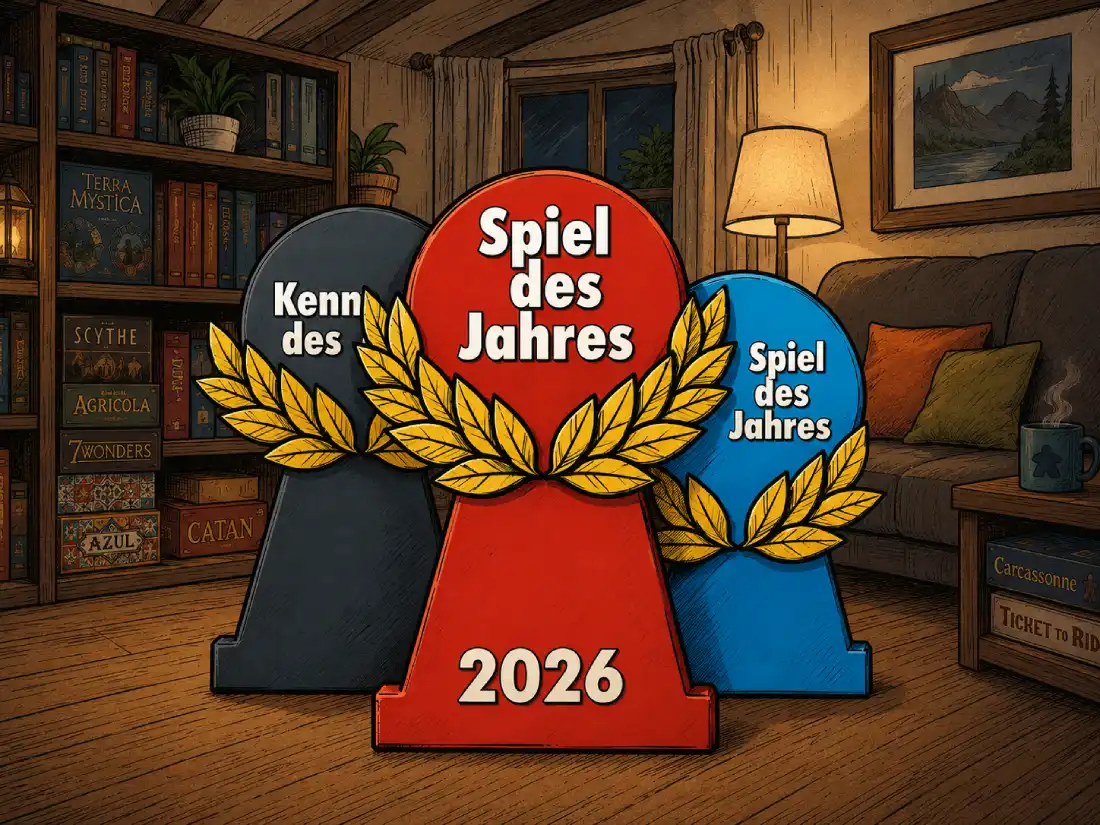
    Three years running, the Spiel des Jahres jury handed the big trophy to a cooperative game. Dorfromantik, then Sky Team, then Bomb Busters. I’d started assuming co-op was just what won now, the way a genre calcifies once a few voters decide they like the shape of it. Then this year the jury picked a word association party game instead, and the streak is dead.

    How JinxO Won Spiel des Jahres 2026

    The winner is JinxO, designed by Martin Ang and published in Germany through Game Factory as Dito!. It beat out Corey Konieczka’s Cozy Stickerville and Markus Slawitscheck’s Morty Sorty Magic Shop, and it’s only the fourth word game to win the award in its 47-year history, after Barbarossa, Codenames, and Just One. That’s a short list, and it tells you something about how hard it is to make a party game the jury takes seriously instead of just enjoys at a table for twenty minutes and forgets by dinner.

    Why JinxO Came Out of Indonesia, Not Germany

    What actually matters here isn’t that a party game won. Party games have always been in the mix. It’s where this one came from. Ang is based in Indonesia, and until last year’s win for Hisashi Hayashi’s Bomb Busters, an Asian designer had never taken the Spiel des Jahres at all.

    Ang was straightforward about the game’s roots at the ceremony: Indonesians love party games, and JinxO grew out of that, not out of trying to guess what a German jury wants. Association chairman Harald Schrapers called out the same gap on stage, that the jury has had nominees from Japan and New Zealand before but never a winner from what he termed the global south, and floated the idea that a game from Africa or South America might be next.

    Worth noting in the same breath: the jury looked at a record 571 games this year, and 94% of them came from male designers. Just 2.3% came from women. That number was 2% last year and 2.6% the year before. Geography is opening up. The gender gap hasn’t moved.

    Reiner Knizia’s Rebirth Wins Kennerspiel des Jahres 2026

    The bigger personal story of the night belongs to Reiner Knizia, whose tile-laying game Rebirth won Kennerspiel des Jahres, the prize for heavier games. That win made him the first designer ever to complete the full set: Spiel des Jahres, Kennerspiel des Jahres, and Kinderspiel des Jahres, the last of which he picked up back in 2008 for the kids’ game Whoowasit? alongside a Spiel win that year for Keltis. Nobody else has all three.

    Markus Slawitscheck came close to joining him this year too, having already won Kennerspiel for Challengers! in 2023 and Kinderspiel for Magic Keys in 2024, but Morty Sorty Magic Shop’s runner-up finish means Knizia keeps the record to himself for now.

    Knizia’s acceptance speech ran long and was mostly about everyone except Knizia, which tracks for a designer who’s been doing this since before most of the current jury was born. He thanked his wife Margaret, then spent real time on his playtesting group in Munich, making the point that no amount of experience replaces actually running a design through real players over and over.

    He also gave credit to Rebirth’s graphic designers and to Mighty Boards, the small Malta-based publisher that put out the original edition before Frosted Games brought it to Germany, a pairing he used to make a broader point about how localization now matters more than where a publisher happens to be headquartered. His closing line was aimed at anyone tempted to stop paying attention to the field once a winner’s announced: buy the other nominees, play them, and give the people behind them the same respect as the winners.

    Kinderspiel des Jahres 2026 Goes to Mooki Island

    The Kinderspiel des Jahres, the category for kids’ games, went to Florian Sirieix’s Mooki Island, ahead of his own co-design with Benoit Turpin, Boo Party, and a French-Canadian localization called Verflixt Verzaubert.

    What a Spiel des Jahres Win Is Actually Worth

    None of this is small money for the winners. Pegasus Spiele’s co-founder has said before that a Spiel des Jahres win can multiply a game’s sales tenfold or more heading into the German Christmas retail season, which is the single biggest commercial window in the hobby. Game Factory picked up its first Spiel des Jahres win with JinxO after eighteen years in business, on top of an existing Kinderspiel win for Magic Keys in 2024. That’s a real turning point for a publisher, not just a nice line for a press release.

    What the Broken Streak Actually Tells You

    If you’re wondering why the co-op streak ending is worth caring about beyond trivia, it’s because it says something about what the jury was rewarding those three years running, which wasn’t co-op as a genre so much as games that made a table full of strangers feel like a unit working toward one outcome. Sky Team, still one of the sharpest two-player co-ops on the market and a 4.8/5 in my own Skyteam review, did that with just two players and a cockpit. JinxO does something closer to the opposite: it’s a party game, built for a crowd, built to be loud. Different mechanism, same instinct from the jury to reward games engineered around a room, not a rulebook.

    Spiel des Jahres 2026 Winners and Nominees

    CategoryWinnerNominees
    Spiel des JahresJinxO (Martin Ang / Game Factory)Cozy Stickerville (Corey Konieczka); Morty Sorty Magic Shop (Markus Slawitscheck)
    Kennerspiel des JahresRebirth (Reiner Knizia / Frosted Games)Boss Fighters QR (Michael Palm, Lukas Zach); Moon Colony Bloodbath (Donald X Vaccarino)
    Kinderspiel des JahresMooki Island (Florian Sirieix / Kosmos)Boo Party (Florian Sirieix, Benoit Turpin); Verflixt Verzaubert (Thomas Dagenais-Lespérance)
  • Horrified: Dungeons & Dragons Goes to Ravenloft: Smart Move or Just More Monsters?

    Horrified: Dungeons & Dragons Goes to Ravenloft: Smart Move or Just More Monsters?

    Another Horrified Expansion? Ok, everything looks convincing but, is it worth it?

    The monster lineup is legitimately good. You get Strahd Von Zarovich, Baba Lysaga in her walking hut, the Gulthias Tree, and a Carrionette — that last one being the unsettling puppet-like figure Ravensburger teased back in January and the thing that made half the internet briefly lose their minds. Each gets its own miniature. Five new playable characters come in the box alongside them. The expansion requires the base Horrified: D&D game to play.

    The Case For It

    The original Horrified: D&D launched in August 2025 set in Undermountain, with a Beholder, Mimic, Displacer Beast, and Red Dragon. That’s a perfectly solid monster roster, but Undermountain has never been Ravensburger’s richest thematic territory. Ravenloft is a different situation.

    The Domains of Dread are built entirely around gothic horror, which is where the Horrified formula — cooperative monster management, item collection, escalating dread — fits most naturally. Strahd is one of D&D’s most iconic antagonists for a reason.

    Baba Lysaga’s walking hut adds the kind of visual spectacle that makes the miniature worthwhile on the shelf alone. Timing is deliberate too: the D&D Season of Horror initiative runs April through June 2026, and a July release puts the expansion in stores just as that wave of interest crests into summer.

    The Case Against It

    The base game shipped with four monsters. Universal Monsters shipped with six (seven minis if you count the Bride separately). That gap matters more than it sounds because monster pairing is where Horrified’s replayability actually lives.

    With four monsters in Undermountain, the community quickly discovered the viable two-monster combinations collapse fast: Mimic and Displacer Beast is too easy, Beholder and Red Dragon is punishing to the point of feeling broken, which leaves Displacer, Mimic, and Beholder as the only sensible three-monster game. The expansion adds four more monsters, which should finally open that combination space up — but it took a $30 add-on to get there.

    There’s also the design lineage issue. Universal Monsters was designed by Prospero Hall. Everything after had a new team, and the community has noticed. The sequels understand what makes Horrified work well enough to produce competent games, but not well enough to avoid the fiddliness that crept into later monster mechanics. Ravenloft won’t change who designed the engine.

    Whether the Ravenloft monster defeat conditions are more elegantly constructed than the Red Dragon’s — which players consistently describe as overwhelming — is the actual question this expansion needs to answer.

    The D20 ability mechanic remains divisive too. Some players like the unpredictability. Others call it a light dusting of D&D theme over what is still fundamentally a Horrified game, and they’re not wrong.

    Cross-game mixing with other Horrified titles is technically supported but practically cumbersome: icon mismatches, shared card decks that don’t account for theme, and enough workarounds that most players don’t bother. Strahd on the Universal Monsters board is a headache, not a feature.

    If you bounced off the base D&D game because it felt thin, four new Ravenloft monsters probably fixes the combination problem. It doesn’t fix the engine.

    Worth Buying?

    The monster selection is the best thematic fit the Horrified franchise has found for the D&D license, and four new monsters should finally crack open the combination problem that made the base box feel claustrophobic. The BGG community was already building fan-made monsters to compensate for the original’s thin roster — which tells you everything about the demand. Ravenloft addresses that directly.

    What it won’t fix is where the design stands relative to Universal Monsters. That gap is real, it’s been consistent across every sequel, and it’s not something a Ravenloft coat of paint resolves.

    If this is your first Horrified game, start with Universal. If you already own D&D Undermountain and want a reason to table it again, this is exactly that reason. Early play reports aren’t in yet, but the bones are better than the base box gave us to work with.

  • 5 Board Games Every Beginner Should Try

    5 Board Games Every Beginner Should Try

    Walking into a board game store for the first time can be overwhelming. Thousands of titles, complex rules, and passionate hobbyists throwing around terms like “worker placement” and “engine builder” can make the hobby feel impenetrable. The good news? The best gateway games are designed to be welcoming, simple to learn, and genuinely fun from the very first play.

    We’ve rounded up five board games that consistently turn newcomers into lifelong fans. Every game on this list can be taught in under 15 minutes, plays in an hour or less, and scales well for 2–4 players.

    1. Ticket to Ride

    Ticket to Ride is the quintessential gateway game. Players collect colored train cards and claim railway routes across a map of North America, scoring points for completing specific city-to-city connections. Turns are simple — draw cards, place trains, or take new tickets — and each game takes about 45 minutes. The rules fit on a single page, but the strategic choices run deep.

    2. Catan

    Catan revolutionized board gaming when it was released in 1995 and still holds up today. Players build settlements and roads on a modular island, trading resources with each other to expand their civilizations. The constant negotiation and the randomness of dice rolls make every game a different story.

    3. Codenames

    Codenames is the perfect party game for mixed groups. Two teams of spies race to identify their secret agents on a 5×5 grid of words, with spymasters giving cryptic one-word clues. It plays 4–8 people, teaches in two minutes, and creates hilarious “how did you get that from THAT clue?” moments.

    4. Azul

    Azul is a tactile, visually stunning tile-laying game that won the Spiel des Jahres in 2018. Players draft colorful ceramic tiles to decorate a palace wall, trying to score patterns while avoiding penalty points. The rules are beautifully simple, and the chunky components make every turn satisfying.

    5. Pandemic

    Pandemic introduces cooperative gameplay — instead of competing, everyone works together as a team of disease-fighting specialists trying to save the world. The tension builds as outbreaks spread, and the shared victory (or defeat) creates memorable group moments.

    Where to Go From Here

    Once you’ve tried a few of these, you’ll start to discover what you like. Love the trading in Catan? Try 7 Wonders Duel. Enjoy the puzzle of Azul? Check out Wingspan. The modern board game world is enormous, and these five games are just the first doorway in. Welcome to the hobby.